
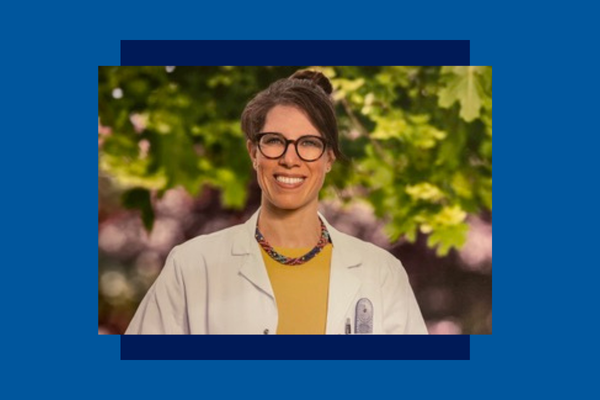
Duke Orthopaedics is excited to welcome Dr. Natalie Mengis, an orthopaedic surgeon and researcher from Europe, as part of the Trans-Atlantic Capacity Building Initiative. This program aims to enhance collaboration in orthopaedic sports medicine. Led by the University of Basel in partnership with Duke and other institutions, the initiative seeks to establish sustainable networks that promote research, education, and clinical care across continents.
Dr. Mengis completed her residency in Germany in 2020 with a focus on knee, foot, and ankle surgery, followed by an additional qualification in Sports Medicine in 2022. She later moved to Switzerland to serve as a consultant orthopaedic surgeon. Her leadership roles include serving as an ESSKA Teacher, AGA Mentor, and Chair of the Fellowship Committee for Swiss Female Orthopaedics, while contributing to committees within the German Knee Society and the German-Speaking Arthroscopy Association.
Her research interests span prehabilitation and return-to-sport strategies after knee injuries, phenotyping and alignment in knee arthroplasty, and injury prevention in children and adolescents—a passion that inspired her to establish a working group in Basel dedicated to preventive strategies.
The Trans-Atlantic Capacity Building Initiative is designed to deepen clinical and scientific collaboration between leading experts across Europe and the United States. By connecting institutions, physicians, scientists, and trainees, the program promotes meaningful knowledge exchange, accelerates innovation, and advances the global standard of musculoskeletal care. Through shared experiences, research, and mentorship, the initiative aims to strengthen the next generation of orthopaedic leaders and improve musculoskeletal health worldwide.
Dr. Mengis describes her experience at Duke as “exceptional,” highlighting the openness of her colleagues and her participation in the Feagin Leadership Program, which she calls an enriching opportunity to develop leadership skills often overlooked in clinical practice. She hopes her time at Duke will lead to collaborative research that strengthens both science and professional relationships.
This partnership reflects Duke’s broader commitment to global health—building bridges across borders to share knowledge, train future leaders, and advance patient care everywhere. Through initiatives like this, Duke continues to promote collaboration that transforms musculoskeletal medicine worldwide.