
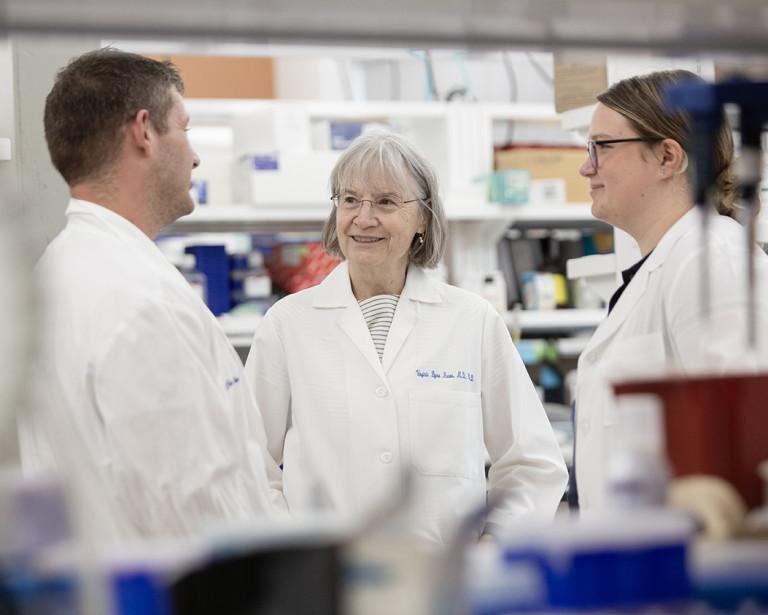
Duke Orthopaedic Surgery professor of medicine, Virginia Byers Kraus, MD, PhD, is the senior author of a new study revealing that tiny RNA molecules circulating in the blood may be among the most accurate indicators of short‑term survival in older adults. Published in Aging Cell, the research shows that a combination of just a few piRNAs can predict two‑year survival with remarkable precision.
“The combination of just a few piRNAs was the strongest predictor of two‑year survival in older adults — stronger than age, lifestyle habits, or any other health measures we examined,” Kraus said.
Using machine learning and causal AI approaches to analyze more than 1,200 blood samples, the team found that individuals with lower levels of certain piRNAs consistently lived longer. These findings suggest that a simple blood test could one day help clinicians identify risk earlier and inform strategies to support healthier aging. Learn more.